



Prices incl. VAT plus shipping costs
Delivery time appr. 7-21 workdays**
- Order number: IHV-25399
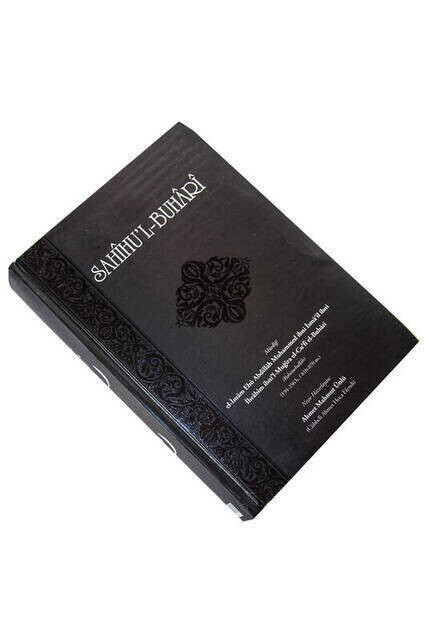
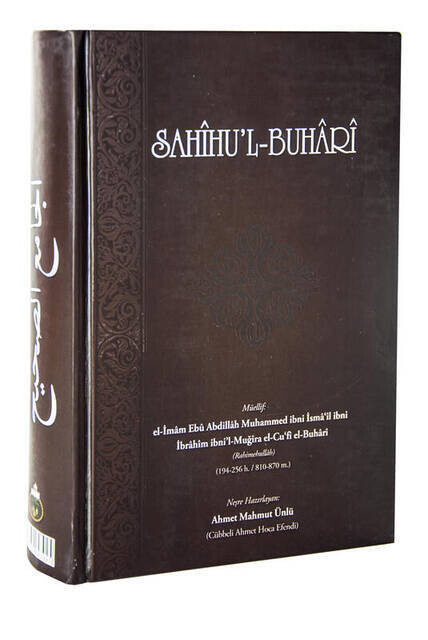
Sahihi Buhari - Cübbeli Ahmet Hoca
Product features :
Book Title: SAHÎHU'L-BUH ve Acirc; RI
Author: al-İmâm Abu Abdillâh Muhammed ibni İsma il ibni İbrahim ibni'l-Muğîra al-Cu'fî al-Bukhârî
Publication Prepared by: Ahmet Mahmut Ünlü (Cübbeli Ahmet Hoca)
Publisher: Tuana Publishing
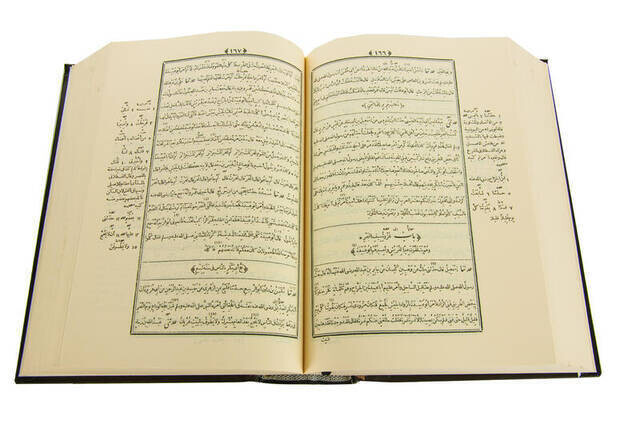
Language: Arabic
Cover Quality: Hardcover
Page Quality: 1st Dough
Size: 17 X 24 cm
Weight: 1,766 gr
SAHÎHU'L-BUH and Acirc; RI
THE BIBLE
All praises are the only one worthy of praise, about the Prophet in the Quran:
"He does not speak out of an intrinsic desire. What he says is only a revelation that is revealed to him by Allah (Allah's Aleyhisselam)." (an-Najm Sura: 3-4) is reserved for Allâh-u Ta'âlâ.
Unlimited salat-u greetings Abu Bakr (At the end of his sermon in the Farewell Hajj, who is a dungeon of Radiyallâhu:
"Let the present (s) deliver my words to the (s) who are not here. It is hoped that the present (here) will convey it to someone who understands it better." (al-Bukhârî, as-Sahîh, al-'Ilim: 9, number: 67, 1/37) Q, the Prophet (Saalllahu Aleyhi and Salam), who said, may be above his Ehl-i Beyti and all his companions.
"Sahîh-i Buhârî" hi Print Prints
"Sahîh-i Bukhârî" has been one of the most studied works throughout the history of Islam.
Kâtip Çelebi (Rahimehullâh), Imam-1 Bukhârî (Rahimehullâh) rn "Sahîh" izenne annotated, hashiye, talik, ihtisar and more than 80 notes and notes made the name of the work. According to a new research conducted today, the number of studies carried out on various types of "Sahîh-i Bukhârî" is about five hundred.
Undoubtedly, Imam-i Bukhârî (Rahimehullâh )'s sensitivity in accepting hadiths, his success in order and classification, as well as his tmâm-ı Bukhârî (Rahimehullâh) m ihlâs and sincerity, had an important effect on the attention of these witnesses.
Because of these and similar features, "Sahîh-i Bukhârî" has become the most authentic book after the book of Allah in time and has been received a general acceptance by the scholars.
"Sahîh-i Bukhârî" was written many times throughout history, especially with the spread of the printing press in the Islamic world, poor copies (manuscripts) turned into printed copies and many "Sahîh-i Bukhârî" texts emerged.
Among them, Indian scholar Ahmed Alî as-Sehârenpûrî (Rahimehullâh), who was accepted as the first full-text printed copy in the world, (d. 1880), with his 1851-1853 published publication in Delhi, and Sultan Abdulhamid II's expense from his own private treasury. His publication "Sahîh-i Bukhârî", which he commissioned in Egypt in 1893-1895, stands out.
Features of Sultan Abdulhamid II Han Neşri
The publication of Sultan Abdulhamid II, which is one of the most scientific writings of "Sahih-i Bukhârî", is superior to its peers in many ways. The most important feature of the publication is that it is based on the copy of Yûnînî (Rahimehullâh), which is the most reliable and detailed version of "Sahîh-i Bukhârî".
Although it is not clear how the idea of making a new edition of "Sahîh-i Bukhârî" emerged, Sultan Abdülhamîd Han (Aleyhi 'r-Rahmeti ve'l-Gufrân) ordered this new publication in 1311 (1893) and It is stated in the preliminary of the book that he wants to be made based on other copies, especially the Yûnînî copy, and with a note, (ei-
Bukhârî, Sahihli 'l-Biyıhârî, nşr.: Heyet, -Sultâniyye- 1/3 -Mukaddime-) As a matter of fact, Sultan Abdulhamid II, to be used in publishing, "al-Hizânetü'l-Mülûkiyye" (in the Palace Library) He sent his Yûnînî copy and some other printed copies to Egypt.
Thereupon, a committee composed of Azhar scholars and notes, who was assigned with the revision of the book, took into account some copies found in Egypt, in addition to those coming from Istanbul, in addition to those who came from Istanbul, in the work he conducted under the chairmanship of Azhar Şeyhi Hassimne en-Nevâvî (Rahimehullâh).
Finally, this committee completed the correction and response process in about six months and the work was published in the Matba'ai Emîriyye in Bulak in nine volumes (two copies). The first four volumes of the book constitute the first binder, and the remaining five volumes constitute the second binder.
Although the dates 1311-1312 are read in the print records on the book, it is stated that the edition was completed at the beginning of 1313 Rabi'ulevvel (August 1895) at the end of the last volume. As a matter of fact, the narration of 20 Safer 1313 (Sunday, August 12, 1895) is read at the end of the decree, in which Azhar Şeyhi Hasuna en-Nawawî (Rahimehullâh) received a note and a note for the completion of the book and the story of the publication is told.
According to the statement of Hassûne en-Nawavî (Rahimehullâh) in his statement at the beginning of the print, Sultan Abdulhamid II decided to transfer and publish hadiths in a reasonable way, with the aim of serving the sunnah, and for this reason, he was prominent with his reliability in the hadith books. He ordered that the written and printed copies of the "Sahîh-i Bukhârî" be compared and a new edition be made and distributed to the Islamic world free of charge.
This instruction of Hass -ne en-Nevâvî (Rahimehullâh), Sultan Abdulhamid II (Rahimehullâh) on 19 Ramadan 1312 (16 March 1895), he was contacted by Gâzî Ahmed Muhtar Pasha, the Egyptian representative of the Ottoman Empire, with a copy of the manuscript Yûnînî from Istanbul. indicates that the other printed copies were delivered by Abdüsselâm Pasha al-Müveylihî.
Upon this order, Hass ine en-Nevâvî (Rahimehullâh), who was himself Hanafi, established a committee of sixteen members of Azhar scholars of four sects.
Although the correction committee completed the correction and response of the book with great care at the end of their work, the resulting printing errors were added to the print as a "Hatâ-Savâb" table at the beginning of each volume.
In the preliminary text before the text, Sultan Abdulhamid II was praised and the story of Y n and the note; the story of the nînî copy was told, and Yûnînî (Ra) on the last page with the expressions of Ibn Mâlik on the first page of the manuscript. - Himehullâh) s explanations about the copy are taken.
At the beginning of the book are the seals and names of the six-person correction committee with the sealed approval of Şeyhülislam Mehmed Cemâleddîn Efendi, apart from the approval of the Azhar Sheikh and possibly his mukaddime.
As it is understood from the statements in the holy book, the conformity of the published book to the original was approved by the six-person delegation under the sheikh's Islamic dream by order of Sultan Abdulhamid II.
The Peculiarity of This Copy In Your Hand When I thought of making you a copy of "Sahîh-i Bukhari", this poor brother, I came across in my personal library 1-2 years after the print prepared by Sultan Abdulhamid II (1314-1315 / 1896-1897). The work was an exact copy of the edition of Sultan Abdulhamid II (Aleyhi'r-Rahmeti and 7- Gufrân), and it was a copy that was once again corrected and published with the error-savab (false-true) ruler and the corrections specified in the note. Here I have tabulated that copy for you that the copy and note; these merits of the inn are mentioned on page 163 of the 9th juz at the end. "el- C and Acirc; MVU'S-SAHÎH" S and Acirc; HİBİ
İM ve Acirc; MI BUH and Acirc; RÎ HAZRETLERİ
His Holiness Imam-i Bukhârî was born in 13 Şevvâl 194 (20 July 810) Juma gue and note; nü Buhârâ. He was Berdizbeh Mecûsî, the grandfather of his grandfather. His son Muğîre became a Muslim by means of the governor of Bukhari, Yaman al-Cu'fî. Hence, His Holiness Imam-i Bukhârî is also referred to as Cu'fi.
There is not much information about his grandfather İbrâhim, but his father İsmâ'îl, İmâm-ı Malik ibni Enes and Abdullâh ibni Mübârek (Radıyal-
Lâhu Anhümâ) is known to be a person who learned hadith from scholars and it is understood that his father passed away when His Holiness Imam-i Bukhari was still a child, and some books of hadith and note; se dair were passed on to his son. It is stated that her mother was a devout woman whose prayer was accepted.
The eyes of Imam-i Bukhari had an illness at a young age and became unworthy. Although his mother tried to treat him, his son's blindness continued. He prayed for a long time for his child's eyes to see. One night, he saw Abraham (Aleyhisselam) in his dream and asked him to pray. Ibrâhîm (Aleyhisselâm) said to him: "Do not be sad, give back the eyes of your son of Allah and take note." he heralded. In the morning, the eyes of Imam-i Bukhârî (Rahimehullâh) Pleasure and note began to see again.
Imam-i Bukhârî started to learn hadiths from Bukhari muhaddis such as Muhammed ibni Salam al-Bîkendî and Abdullah ibni Muhammed el-Musedî (Rahimehumellâh) towards the age of ten.
When he was eleven years old, he drew attention with his correction of some of the mistakes he made during the narration of his teacher, İmânı-ı Incili (Rahimehullâh). When he was sixteen years old, he had memorized the books of Ibn al-Mubarek and Vekî 'ibni Cerrah (Radial-: dhu Anhümâ).
Meanwhile, he went on the pilgrimage with his mother and brother Ahmed (Rahimehümellâh) and took note. Although they returned to their homeland after the Hajj, His Holiness Imam-i Bukhari stayed in Makkah-i Mükerreme and collected hadiths from scholars such as Hallâd ibni Yahya and Muhaddis Humeydî (Rahimehümalâh). Finally, and note; ra began to wander around the centers of science for this purpose.
Imam-i Bukhârî says that the number of hadith scholars from whom he wrote hadiths is 1080. (ez-Zehebî, A 'lamu' n-nubaba, 12/395)
His famous student Firebrî (Rahimehullâh) says that 90.000 students from His Holiness Imam-i Bukhârî listened to "el-Câmi'u's-sahîh". His other well-known students are muhaddis such as Imam-i Muslim, Tirmidhi, Abu Hâtim, Abu Züra er-Râzî, Muhammed ibni Nasr el-Mervezî, Sâlih Cezere and İbnü Huzoma (Rahimehümullâh).
It is understood that Imam-i Bukhârî created a large library with the stories he collected at the end of his long travels and carried his books with him as much as possible during his travels.
Complaining and note that there is no place to step in the assistant's room. That he said that he did not sleep for one night and calculated the hadiths he had written up to that day and recorded 200,000 hadiths. (al-Dhahabi, A 'lamu' n-nubaba, 12/411, 412, 452)
One of the best examples showing that the hadiths he wrote did not remain in the books, but embroidered them in the memory, is the test he gave in Baghdad. According to the narration of Ibn Adî Rjhimehullâh), the muhaddis who heard about the arrival of Imam-i Bukhari to Baghdad mixed the scriptures and texts of the 100 hadiths and gave them to ten people and told them to ask about these hadiths in order when Hazrat Imam-i Bukhari came to the scientific assembly.
These ten people read the identified hadiths in the presence of scholars who came from various Islamic countries and asked for information about the nature of them. Imam-i Bukhârî (Rahimehullâh) stated that none of these hadiths were known to them in the way they were read. He said the truth to each and every one of them.
Thus, those who were hesitant about His Holiness Imam-i Bukhârî (Rahimehullâh) understood exactly what kind of memory he had and what a wide knowledge of hadith he had.
Imam-i Bukhari was far from the statesmen, even though he gave what he knew without forgiveness to anyone who wanted to learn science from him, and noted; he considered going to their palaces as an act that humiliated science, and he risked enduring all difficulties for this cause.
Hâlid ibin Ahmed ez-Zühlî, the governor of Khorasan, sent him a man and declared that he wanted to listen to "al-Jami'u's-sahîh", "et-Târihu'l-kebîr" and other works from him, and refused this request.
Imam-i Bukhârî (Rahimehullâh) made him read hadiths if he really wanted to, that he could not humiliate ilm, that he could not bring him to the feet of others, and the note; he could prohibit him from coming to the mosque, and if he does not want it, he could prohibit him from reading hadiths, and he said I would not say that he did not spare the knowledge from anyone.
He rejected the request of the governor of Bukhârâ to teach only his own children and his note on the grounds that he could not allocate knowledge to certain people.
Thereupon, the governor acquired some of his close men ideas that were incompatible with the Ahl-i Sunnah view of His Holiness Imam-i Bukhari, and he made them claim the note. He then ordered his exile from his hometown based on this claim.
In the face of this situation, His Holiness Imam-i Bukhârî left Buhârâ and took a note and set out to go to Samarkand from there. He visited my relatives in the town of Hartenk, which is 3 miles from Samarkand.
But there he got sick and could not go to Samarkand. He passed away on the night of Eid al-Fitr in 256, and the next day (1 September 870 Friday) was buried there and noted. All that is known about his family is that he has a son named Ahmed and a few assistants in his house.
Some Peculiarities of Imam-i Bukhari
His Holiness Imam-i Bukhari was of medium height and had a thin and thin body. In addition to his many beautiful habits, he also had characteristics such as his little speech and disregard for the opportunities others had.
He did not care about eating and drinking. There are many behaviors that show his generosity, disregard for worldly wealth and his benevolence.
It is noteworthy that the tolerance he showed towards someone to whom he had a creditor of 25,000 dirhams. Some of this person, who has not paid his debt for a long time, advised him to collect his debts through some administrators: "If I ask them for help, they ask me to give fatwa as they do, I cannot sell my religion for the world." he said.
However, some of his friends spoke about this to the administrators despite him. Imam-i Bukhârî (Rahimehullâh) when he heard about this, he asked the debtor not to do any harm and made an agreement with him to pay him 10 dirhams every year.
It is understood from his own expressions that Imam-i Bukhârî is not interested in world affairs and that a man carries out his personal affairs.
The moral virtues of Imam-i Bukhârî are seen in his extremely pious and just words even about the narrators he criticized. The heaviest cerh expressions he uses for a narrator are "Münkerü'l-hadith" when he declares that that person is too weak to be trusted, and "Seketû anh" that the muhaddis do not express his right and note; and that he does not express an opinion.
People who are known for making hadiths of Imam-i Bukhârî (Rahimehullâh) have rarely used the expression `` truth '' and `` note '' even in the word `` liar ''. Avoid backbiting and note; saying that he did not pull anyone and:
"I hope that when I meet Allah, anybody will not be subject to overbearing me because I betrayed me. Because since the day I knew that backbiting harmed those who were busy with him, who and note; I have never backbited him." His saying (az-Zehebî, Târihu'l-islam, 19/259) shows his meticulousness and note on this issue.
His scribe Mu and note, whom Imam-i Bukhari loves and cares about like his son; ti ammed ibni Abu Hâtim found that he loved shooting arrows very much, and noted that only two of the arrows he fired for many years did not hit the target and note; He says that nobody can compete with him. His moral couplets in some books reflect his taste in poetry.
The appreciative will of the scholars who know his Holiness Imam-i Bukhari closely gives an idea about his scientific personality.
His teacher Nu'aym ibni Hammâd (Rahimehullâh) and muhaddis Ya'kûb ibni İbrâhîm ed-Devrakî (Rahimehullâh) -. "Bukhari is the jurist of this ummah." they would say.
His teacher İshâk ibni Râhûye (Rahimehullâh), who is known for his deep knowledge in hadith and fiqh sciences, said to scholars: "Write hadiths from this young man." "If Bukhari had come in Hasen-i Basrî (Radıyallâhu An-hümâ) time, everyone would have to apply to him because he knew hadith and fiqh very well." he would say.
Again, take the nickname "Emîrü'l-mu'minîn fi'l-hadîs" from Basralı teachers and take note; Alî ibni Medînî (Rahimehullâh), who is one of the mıs nâdir muhaddis, "Buhârî only shows humility next to you." they said.
Ibn al-Medînî (Rahimehullâh) also said: "Do not look at him, his eyes are ken and note; he has not seen anyone like a female." He paid off.
The Works of His Holiness Imam-i Bukhârî
1) "al-Jami'u's-sahih."
Imam-i Bukhârî stated that he created this work, which became famous among the people as "Sahîh-i Bukhârî", from among 600,000 hadiths and created it in sixteen years, and before writing each hadith, he always performed a prayer of two rak'ahs by taking ablution.
He started to write his work in Bukhari and continued his classification in Mecca, Medina and Basra.
This work, which has received hundreds of examinations and commentaries in the world of Islam and notes, has been published many times in Istanbul, Egypt, India and Europe.
2) "et-Târîhu'l-kebîr."
This book, written by Imam-i Bukhârî before "al-Câmi'u's-sahîh", is one of the first works of its field, and here it has determined the reliability level of nearly 13,000 narrators from the companions to their own sheikhs. The work is printed.
3) "at-Târîhu 'l-evsat."
Since it is understood that "et-Târîhu'l-kebîr" is understood to be an anticipator, it is not known that the ese and note have come to the present day. A very incomplete copy (Bankipûr 12/32, no: 687, 56 verak) is available in India.
4) "et-Târîhu's-Sağr."
It is an extract of uet-Târihu 'l-kebîr, and it deals with the narrators not alphabetically as in "et-Târîhu'l-kebîr" but according to their death dates, and gives information about them that is not found in other works.
5) "Kitâbii 'd-du'afâi's-Sagir."
It starts with the name Abraham and includes 418 narrators. Compared to the books of Imam-i Bukhari mentioned earlier, it is very small in volume and is alphabetical. The work has been printed.
6) "Kitâbii'l-künâ
Complementary to "et-Târîhu'l-kebîr", this work gives brief information about 1000 narrators who are known with their names and tags rather than notes. The book has been published.
7) "et-Târîh fi ma'rifeti ruvâti'l-hadîs ve nakaleli'l-asar and appeal to my sikatift zu'afâihim and historical loyalty."
This work is also very small with reference and note to the other history books of Imam-i Bukhârî and has a copy in the Library of Topkapı Palace Museum (Medina, no: 524, 18 verak).
8) "at-Tevârîh wa'l-ensâb."
The work, which includes information about some important personalities, does not have a certain method as in the other book. One copy is available in the Topkapı Palace Museum Library (3.Ahmed, no: 2969, vr: 382a-399b).
9) "al-Adab 'l-mufred."
The work, which includes some hadiths about good morals that are not included in ~ al-Jami'u's-sahih, and which compiles 1322 hadiths in 644 chapters, has been published.
Since he mentions the morals of Islam in this work, his great saints Sheikh Muham-, ~ icd Zekerivyâ al-Bukhari, intending to chant after every meal, read a few hadiths from this work or had him read to one of the guests, which he sometimes had me read. It is mentioned in the sources that there are some other works of Imam-i Bukhârî other than these works.
et-Bukhari. et-Târîhu 'l-kabir, 1/49, 2/60, 95, 158, 169, 3/1; al-Khatib, Târîhu Bağdâd, 2 / 4-34; iî-Zd & raquo; ebL .1 iâmü 'n-nübelâ, 12 / 391-471; es-Subki, Tabekât, 2 / 213-235; Ibn Hajar, Tehzîbi 't-
TU-1 ~ 4-275, 9 / 47-55; al-Kettânî, ar-Risâletü'l-müstetrafe, p: 41 and more; Yusuf el-V t-TIsi. 7J :. bâ iyyâtü 'l-Imam' l-Bukhari, sh: 44-49; 'Abdülğanî' Abdülhâlik, al-İmâmii 'l-Bukhâri ae i-z' /: Td Encyclopedia of Islam, 6 / 368-372)
CONFIRMATION WITH "SAHÎH-İ BUH and Acirc; RÎ"
1) Remembering "Sahîh-i Bukhârî"
İmâm-ı Bistâmî, Taşköprîzâde ve İmâm-ı Nebhânî (Rahimehümullâh) m
as to their statements; Recognizing the book "Sahîh-i Bukhârî" of Muhammed ibni İsmâ'îl el-Bukhârî (Rahimehullâh) is one of the deeds experienced by Mâyih in order to be protected from infectious diseases such as tan and plague.
('Abdurrahman el-Bistâmî, el-Ed'ıyetü'l-müntehabe, Siileymâniye Ktp., Hacı Mahmud Efendi, number: 4228, verak: 18a-18b;' Isâmüddîn Taşköprîzâde, Rısâletü 'ş-healing li-edvâi vebâ, sh: 95-96; Yusuf an-Nebhânî, Se'âdetii'd-dâreyn, sh: 576)
2) Reading Books Other Than the Quran for the Purpose of Healing and Tabarruk
Some of them: "Only the Quran is read for Ta'abbüd (to worship by reading the word), but you do not recall some books such as 'Bukhari' and 'Şifâ-i Şerif'." When he objected, some scholars like Imam-i Dirkâvî (Rahimehullâh) said to them:
"We read these books in the way of tabarruk (abundance), not in the ta'abbüd sect (to pray and note; by reading the word), because these works are full of verses, hadiths, sari and miracles, and there have been passages from many scholars in them.
How can you decline tabarruk and note; profit can be made with the recitation of works such as 'Bukhârî' and 'Şifâ-i Şerif' ?! Most of the words in them are either verses of the Quran or hadiths, salawat-i sharifs or prayers.
The weather (characteristics and effects) found in these has been tested and its effect (fault) has been observed. How can the experiences of those who try and report be denied by the inexperienced ?! ”('Abdülhayy ei-Kettânî,
al-Medhal ilâ kitâbi 'sh-Shifa, p: 243)
3) "Sahîh-i Bukhârî" is the Book of the Prophet (Sallellâhu Aleyhi ve Salam)
This answer given by the scholars to the scholars is indeed very appealing. For, in works such as "Sahîh-i Bukhârî", the authors do not have any contribution, but only hadiths and narrations.
For this reason, the Prophet (Sallellâhu Aleyhi ve Salam) about "Sahîh-i Bukhari" in the realm of meaning: "My book." He used the term.
As a matter of fact, he has been given the honor of listening to "Sahîh-i Bukhârî" from Imam-i Firebrî (Rahimehullâh), the greatest preacher who heard "Sahîh-i Bukhârî" from Imam-i Bukhârî (Rahimehullâh). Abu Zayd al-Marvezî al-Fakîh (Rahimehullâh) (d.371) narrated:
"Once I (in Ka'be-i Muazzama) I was sleeping between Hacer-i Aswad and Maqam-ı Ibrahim, in that sleep I saw the Prophet in my dream.
"O Abu Zayd! How long will you teach fiqh, but you will not get my book to be read?" He commanded.
Then I said: 'O Prophet! (I don't know a book you wrote.) Which is your book? ' when he asks:
"(Muhammad) tbnü İsmâ'îl (al-Bukhârî'n) is the Jami'i (Sahîhu'l-Bukhârî compiled from sahih hadiths)." He said. '' (ar-Râfi'î, at-Tedvîrt JîAhbâri Kazvîn, 2/46; İbnü Hacer el-'Askalânî, Ta'lîku't-ta'lîk, 5/422; an-Nawawi, Tahzîbü'l-esmâ ve'l-lugat, sh: 92)
Ibn Hajar (Rahimehullâh) said: "The isnadi of this story is sound, those who narrate it are sika (very reliable) imams.
Abu Zeyd (Rahimehullâh) is one of the great prostitutes whose views are incompatible in the Shafi'i Madhhab. Himself "Sahîh-i Bukhârî", İmâm-ı Firebrî (Rahimehullâh)
(ibnü Hacer ei-'Askaiânî, Ta 'lîku' m lik.5 422; en-Nawawi, Tehzîbü 'l-esmâ, p: 92)
4) Some of the Peculiarities of the "Sahîh-i Bukhârî" Marshmallow and the Importance of Keeping That Book at Home and in the Hearth
a) Let it be known that; Many reports have reached us from the scholars and the declaration of the book "Sahîh-i Bukhârî" stating that the reading of the book "Sahîh-i Bukhârî" caused all the troubles and notes on the issue, especially on the common troubles such as contagious diseases.
As a matter of fact, one of the first commentators of "Bukhari" hin and who was accepted as the order of believers in the science of hadith, Ebû Muhammed ibni Abî Cemre, whom he referred to as' Imam 'and Kudve (leader)'
Rahimehullâh) said: "Some of the devotees I have met, some of the great sayyids whose virtues are given to me by everyone, are narrated to me:
In any difficulty the book 'Sahîhu'l-Bukhârî' (with the intention of ferac and salvation) was read, that violence was definitely triggered.
It has not been possible to get on a ship with him and that ship has sunk. That book has not been found in a locality and found that something was stolen or a fire broke out there. ' they said.
The prayer of Imam-i Bukhârî (Rahimehullâh) was a muqab (definitively accepted) person, and that person prayed for the reciter of 'Sahîh-i Bukhârî'. May the mercy of Allah be upon him. "
(İbnü Hacer el-'Askalânî, Fethu'l-Bârî bi Şerhi Sahihi 'l-Bukhârî, 1/13; el-Kastallânî, İrşâdü' s-sârî, 1/29; as-Süyûtî, Tedrîbü 'r-râvî, 1 / 96; al-'Aclûnî, Hılyetii people 'l-phased and' l-kemâl, Miiselsel hadith number: 25, sh: 318)
Ibn Hajar (Rahimehullâh) also accepted this statement of Ibn Abi Jamra (Rahimehullâh) and said in the bet that he counted his virtues against the book "Bukhari" hin "Muslim":
`` (In the books of hadiths) 'Sahîh-i Bukhârî' has the virtue of reading himself and note that it will open up the troubles, and about the book 'Muslim'
There is no such narration. '' (Ibnü Hajar al-'Askalânî, Fethu 'l-Barî, 1/13; Ah-med el-Kastallânî, İrşâdü' s-sârî li-Şerhi Sahihi 'l-Bukhari, 1/29; es -Süyûtî, Tedrîbii 'r-râvî, 1/96)
b) The author of the great hadith memorandum and the famous commentary Imâdüddîn ibni Ke and not; sir (Rahimehullâh) said:
"The book (belonging to Imam-i Bukhârî) 'Sahîh-i BukhârV (it is so fertile) that it is read (marshmallow) to make it rain from the clouds, and the note is prayed to Allâh-u Ta'âlâ."
(İbnü Kesîr, al-Bidâye ve'n-nihâye, 14/526; Ebu'l-'Abbâs Şihâbüddîn Ahmed al-Kastallânî, İrşâdü 's-sârî li-Şerhi Sahihi' l-Bukhârî, 1/29)
c) According to the narration of Imam-i Sefîrî (Rahimehullâh), one of the commentators of "Sahîh-i Bukhârî": once "Buhârî-i Şerif 'is recalled in Homs to remove the trouble, Allah immediately removed that trouble. (as-Sefîrî) , Sharhu 'i-Bukhârî, 1/55)
d) According to the report of Ibn Hajar al-Heytemî (Rahimehullâh); Imam-i Bukhari was blind as a child, then he saw Ibrahim (Aleyhisselam) in his dream, and he prayed by spitting into his eyes and began to see his eyes.
Therefore, in which trouble is his book "Sahîh-i Bukhârî" read and note; if that misfortune will occur. ('Abdullâh ibnü'l-Hâc İbrahim Eş-Şenkîtî, Neylü'nnecâh, sh: 10-ll;' Abdülhayy el-Kettânî, al-Medhal ile kitâbi'ş-Şifâ, p: 257)
5) Ulama's Incentives for Vital Hatmine for the Elimination of Contagious Diseases Such as Plague
a) İbnü Hacer (Rahimehullâh) stated the following regarding the reading and note "Sahîh-i Bukhârî" in the time of date:
"In the month of Rabi'ulevvel in H. 790 (Egypt-Cairo), deaths increased so much due to severe and contagious diseases that fifty dirhams of watermelon was sold for two religions (gold money).
Most deaths began to occur in family members. Ten and more than twenty people were dying each day.
At that time, Kâzî Burhânüddîn ibni'l-Meylak (Rahimehullâh) encouraged people to read "Sahîh-i Bu ve note; hârî" in al-Câmi'u'l-Azhar (located in the center of Mıır-Kâhire).
Thus, people gathered and recited "Sahih-i Bukhârî", after the marshmallow, they prayed to Allah for the removal of the plague, then they drank more numbers on Friday and recited it again.
When this hatmine was experienced, there was a great blessing and after the number of those who died and the note reached three hundred people every day, in the month of Jamâziyelâhir and-
bâ stood up. (Ibn Hajar ei-'Askalânî, İtıhdü' l-ğumur hi ehtıâi 7- 'hope, 1/354)
b) Imam-ı Makrîzî, İbnü Kesîr and İbnü Hacer (Rahimehümullâh) mna and note; in terms of provinces; h. When the deaths increased and a thousand and two hundred people started to die in one day in Damascus when the month of Rajab entered the year of 749, the decree was made for the gathering of people in the Umayyad Mosque.
Thus, everybody gathered in that mosque, during three days and three nights, they read "Sahîh-i BuhârV", then all people took their children and went to the musallâ (prayer in the open area where Friday and Eid prayers were performed), opened their heads (for humility), weeping and aching loudly. they prayed.
Thus, while the dhikr and prayer continued for three days, the number of deaths decreased completely and finally disappeared.
(al-Makrîzî, as-Sülûk li-ma 'rifeti dowel' l-miilûk, 4/85; İbnü Kesîr, al-Bidâye ve 'n-nihâye, 14/261; İbnü Tağrîberdî, an-Nücûmü'z-zâhira, 10/203; İbnü Hajar al-'Askalânî, Bezlii'l- mâ'ûnfifazli't-taûn, sh: 380-381)
As can be understood from these narrations; Recognizing "Sahih-i Bukhari" in order to get up and note the misfortune in difficult times is an act that is frequently struck by the oakyh.
c) Sheikh Bistâmî and Taşköprîzâde (Rahimehümellâh) said: "In the days of the sâfât-ı semâviyya, like the plague and taûn, the verse scholars make tabarruk (demand blessings) with the marshmallow of the book of Bukhari (blessings), it is a protective shield.
Abu Abdillâh Muhammed ibni İsmâ'îl who passed away in 256 H.
His Holiness al-Bukhari (Rahimehullâh) said: 'Before I write any hadiths and notes in this book, I definitely took ghusl ablution and pray for two rak'ahs and note; dım /.
The number of hadiths in this blessed book, together with the ones that are repeated with different words, is 7275. When the Mükerrers are considered, 4000 hadiths remain.
This is such a lofty and blessed book that if a prayer for rain is made (to Allah for the sake of his marshmallow), it will rain. At the moment of misfortunes, Allah is asked for help (and troubles are eliminated) through his marshmallow. When he is recited, prayers are accepted and troubles occur.
Tmâm-ı Firebrî (Rahimehullâh): 'Sa and note from' lmâm-ı Bukhârî (Rahimehullâh); hîh-i BukhârVyi 90,000 people (hadith scholars) listened and narrated, he was a person whose prayer was mustahab. ' he said.
Imam-i Bukhârî


