Prices incl. VAT plus shipping costs
Delivery time appr. 7-21 workdays**
- Order number: IHV-24422
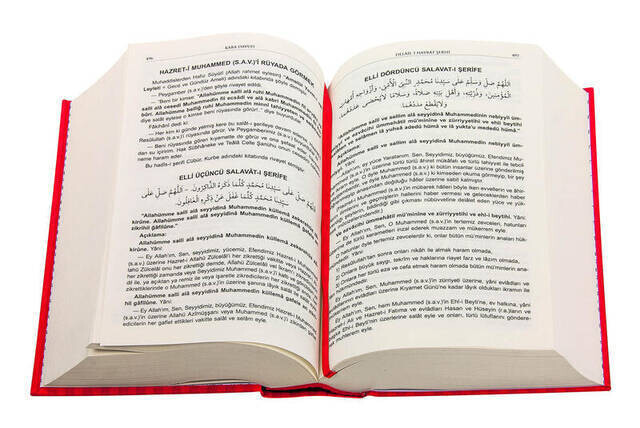
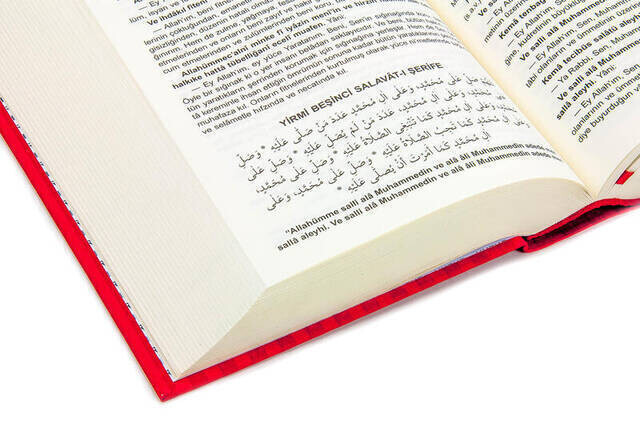
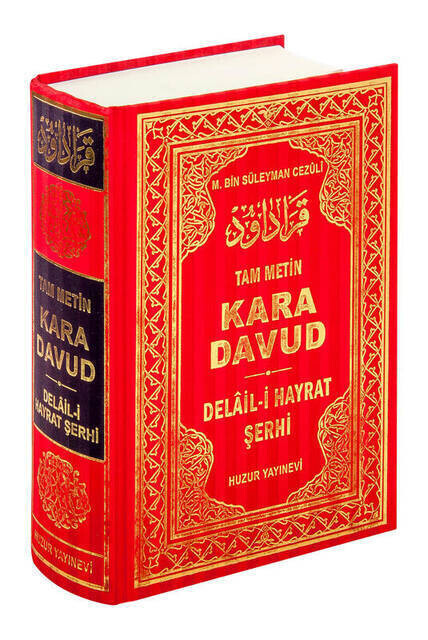
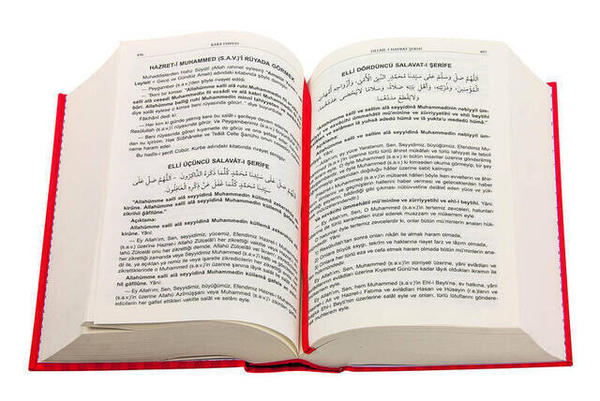
Black Davud - Commentary on Delail-i Hayrat - Huzur Publishing House (Imported Paper)
Kara Davud Efendi was one of the virtuous figures of the Ottoman Conquest era, who studied and interpreted the Dua book, Delâil-i Hayrât, written by Sheikh Abdullah Muhammed Bin Süleymân Cezûlî from Morocco at length. This book was spread over the vast lands of Suleiman the Magnificent, written copies decorated the priests, and some prayers were passed on to hamail. In this work, which is a very extensive prayer book, there are hundreds of Salavat-i Sharifs and extensive explanations of them are made. In addition, this book, which contains many exemplary stories, is a book for very large masses of people.
"ŞERH-İ DEL ve Acirc; İL-İ HAYR and Acirc; T WRITER MERHUM
BLACK DAVUD SIR
Kara Davûd Efendi, who studied DEL and Acirc; İL-İ HAYR and Acirc; T, which was written by Moroccan Sheikh Abdullah Muhammed bin Süleymân al Cezûlî Efendi, was one of the virtuous figures of the Ottoman conquest era. He was also named Izmitî because he was born in Izmit. He had filled his knowledge from the virtuous and scholars of his time such as Mevlânâ Lütfi and Müeyyedzade.
The author of the original of the book, Delâilü'l-Hayrât ve Şevâriku'l-Envâr , was Sheikh Abu Abdul-lah Muhammed, one of the sons of Süley-mân al Cezûlî, born in the region of Cezûl in Morocco.
Sheikh Abu Abdullah Muhammad was a descendant of Imam Haşan (ra). He died of poisoning on the sixteenth day of the 870th anniversary of the month of rebel. When Fâni migrated from the world to the survival realm, he had around 12,000 followers.
In the Ottoman period, wherever they are in the Islamic world, when great books are written, no matter how far distances, roads and continents are, these books are immediately circulated, spread throughout the Ottoman Empire, and come as far as Istanbul. 'u, Rumelia, was written and read by hand.
The prayer book of Abdullah al-Fasî named "Delâilü'l-Hayrat ve Şevâriku'l-Envâr" was spread over the vast lands of Sultan Süleyman the Magnificent in the tenth century of the Islamic calendar and the middle of the 16th century. hamail also passed. In this Progressive Period, knowledge was also at a very advanced stage, and so were the scholars. Scholars such as İbni Kemâl reside in Şeyhü'l-islamlık, poets like Bâki rule in the literary sultanate, the makers of eternal monuments such as Si-nan, and the Commentary of Delâil-i Hay-rat by Kara Dav ratd Efendi are among the believers. was wandering to the tongue.
Kara Davûd Efendi was very popular among the people with this friendly title of Kara. He closed his eyes in Bursa on the date of (Hijri 948 - AD 1541).
Your dwelling is pure
(Hijri 948)
His line was dated to his death. He was buried in the graveyard of the mosque he had built around the Yıldırım district in Bursa. Apart from ŞERH-İ DEL and Acirc, İL-İ HAYR and Acirc, there are also KASİDE-İ NÛNİYE ŞERHÎ. Various prints of these DEL and Acirc were also made with the old letters and lithographs of İL-İ HAYRAT.
Kara Davûd Efendi gives extensive information - mixed with sweet legends - in the preface of his book about Sheikh Abdullah Muhammed Cezûlî, the great author of the Delâil-i Hayrât, which he introduced to the Turks of Turkey as far as the Vienna borders. Now we leave the floor to Kara Davûd Efendi , transfer his work to sweat-clean Turkish and present it to our religious brothers.
Hijri, Ramadan 1390 Mehmed FIG
(MFG) "